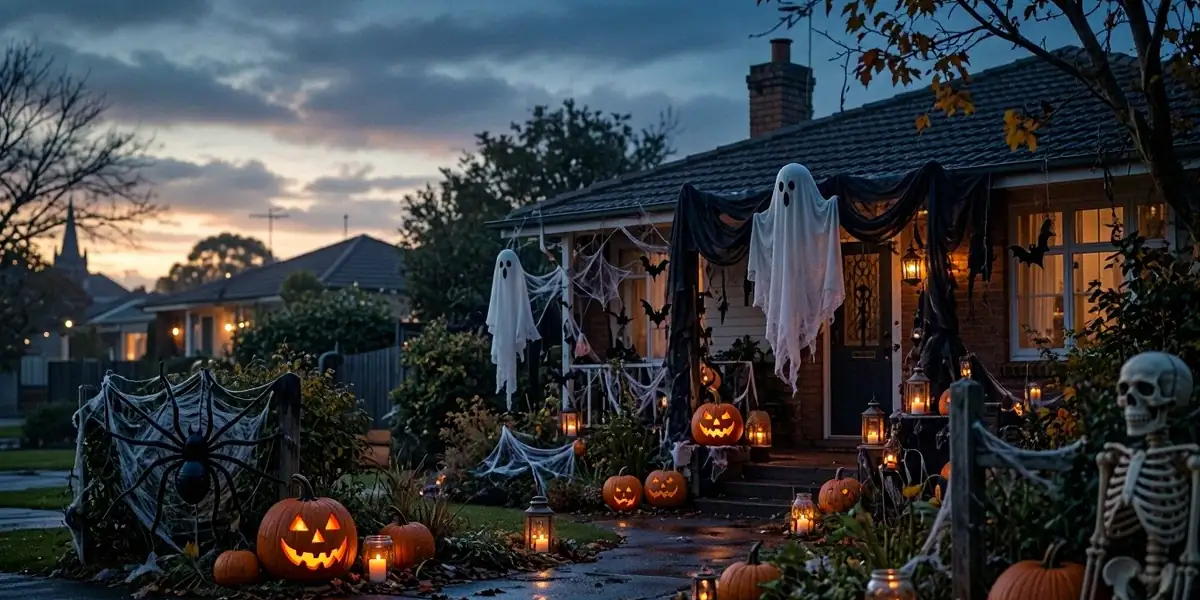
DIY Haunted House for Your Street: A Step-by-Step Guide
There’s something special about the moment you step into a professional haunted attraction — the fog curling around your ankles, the distant scream, the strobe lights catching a figure that wasn’t there a second ago. For years, Australians had to trek to theme parks or pop-up scare events to get that fix. But the thrill of a local haunted house is something we can recreate right on our own street. With Halloween in Australia growing every year, more of us are trading the driveway barbecue for a fog machine and a few well-placed skeletons. So let’s walk through how to build a DIY haunted house that your neighbours will talk about until next October.
Why Build a DIY Haunted House on Your Street?
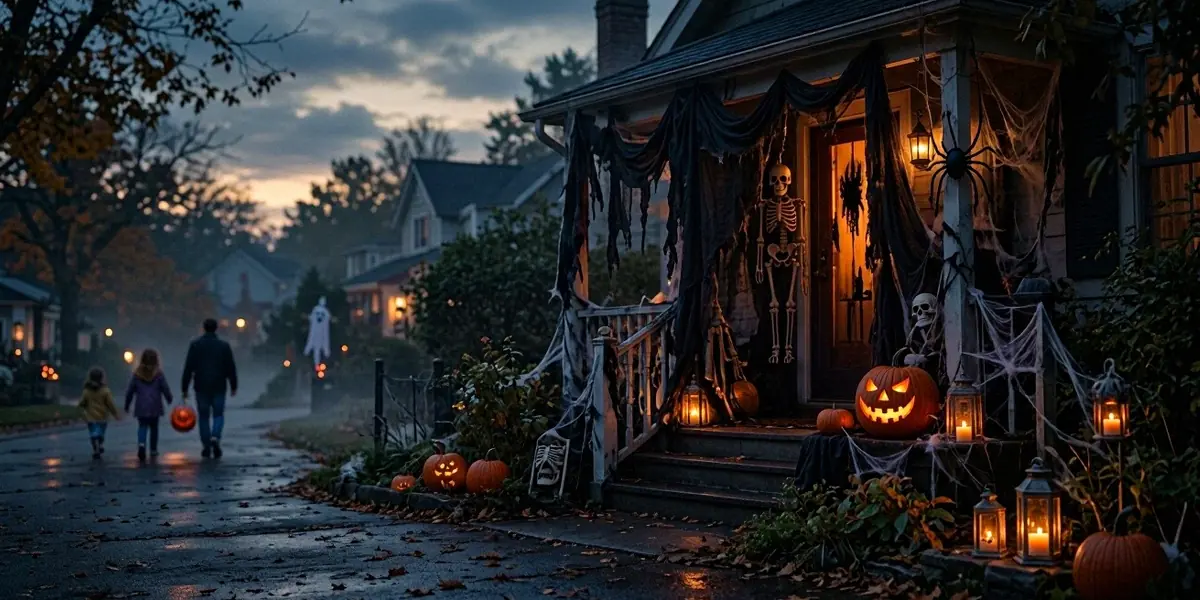
Halloween in Australia is no longer a niche import. Events like the Sydney Zombie Walk attract thousands of costumed participants each year, and suburban streets are increasingly lit up with jack-o’-lanterns and cobwebs. A DIY haunted house taps directly into that momentum while giving your neighbourhood something genuinely memorable.
Bringing Neighbours Together
A haunted house is a shared project, and shared projects build community. When we’ve helped streets put these together, the biggest surprise is always how many people want to pitch in — retirees who love woodworking, teenagers keen to act as scare crew, parents happy to donate fairy lights and fake blood. Suddenly the neighbours you’ve waved at for five years are helping you staple black plastic to a carport. It’s also a low-pressure way for kids to meet each other before school returns.
Creating a Safe and Fun Alternative to Commercial Haunts
Commercial scare events are brilliant, but they come with big crowds, long queues, and ticket prices that add up fast for a family. A street-level haunt is free or donation-based, runs on your schedule, and lets you dial the scare factor up or down depending on who’s walking through. You can have a gentle “spooky but silly” corridor for the little ones and a darker, jumpier section for the teens. Everyone stays close to home, and nobody’s driving an hour back at midnight.
Planning Your Haunted House: Theme and Layout
Before you buy a single prop, spend an evening sketching. A theme gives every decision a direction, and a layout keeps the scares flowing instead of bunching up in one corner.
Choosing a Theme That Suits Your Space
Match the theme to what you’ve actually got. A narrow hallway suits an abandoned asylum corridor with flickering fluorescent tubes and handprints on the walls. A big backyard with gum trees is perfect for Aussie bushland horror — think yowies, bunyips, and a campfire that’s gone very wrong. A garage becomes a mad scientist’s lab or a butcher’s basement. If you’re short on space, a “cursed corn maze” of black fabric walls works in almost any carport. Bunnings Warehouse is our go-to for the structural side — timber, star pickets, zip ties, tarps, and the tools to cut and fix it all. For the decorative layer, Kmart and Spotlight carry affordable Halloween decorations, fabrics, and craft supplies that save you from sewing everything from scratch.
Mapping the Scare Zones
Think of your haunt as a series of zones, each with its own job:
- Approach zone: fog, eerie lighting, and a sign setting the story. This builds anticipation before anyone enters.
- Build-up zone: slower pacing, creepy soundscape, small movements in the corner of the eye.
- Scare zone: the big jump moments — actors, animatronics, sudden light and sound.
- Exit zone: a well-lit, friendly space where people can laugh it off and grab a drink.
Sketch the path on paper first. A good rule of thumb is one scare every 10–15 seconds, with quieter stretches in between so the tension can rebuild.
DIY Props and Effects That Wow
You don’t need a Hollywood budget. Some of the most effective props cost under $30 and take an afternoon to build.
Easy Animatronics with Arduino
A basic Arduino board — available online or from electronics retailers — can run a servo motor that makes a skeleton’s head turn, a coffin lid creak open, or a picture frame rattle. Pair it with a cheap motion sensor and the prop only triggers when someone walks past, which is far scarier than a constant loop. There are plenty of free tutorials online; if you can follow a recipe, you can wire one of these up.
Lighting and Sound Tips
Lighting does more work than any prop. A single coloured bulb behind a sheet turns a hallway into a glowing portal. Strobe lights should be used sparingly and never near anyone with photosensitivity — put up a warning sign at the entrance. For sound, a Bluetooth speaker hidden behind a wall playing a loop of wind, whispers, and distant chainsaws is enough to unsettle people before they see anything. Layer two or three audio tracks at different volumes for a richer effect.
Other crowd-pleasers we’ve seen work brilliantly:
- Floating ghosts made from cheesecloth soaked in fabric stiffener and draped over a balloon.
- Corn maze walls built from black plastic sheeting stapled to a timber frame, with dried corn stalks zip-tied on for texture.
- Fake cobwebs stretched across doorways at head height.
- Mirrors and reflective perspex positioned so actors appear and disappear.
Safety and Permissions: Keeping It Legal and Safe
This is the section most people skip, and it’s the one that matters most. A haunted house is a public gathering, and public gatherings come with obligations.
Council Approvals and Insurance
Local councils may require permits for public events, even small ones on private property if you’re inviting the general public. Rules vary significantly between shires and cities, so check with your local council well before October. Ask specifically about temporary structures, signage, noise curfews, and whether you need public liability insurance. If you’re charging admission, the requirements are usually stricter than for a free community event.
Fire Safety and Crowd Control
The Country Fire Authority (CFA) provides fire safety guidelines for public gatherings, and they’re worth reading even for a small street haunt. Key points include keeping exit paths clear, avoiding flammable materials near heat sources, having a fire extinguisher and a designated fire warden, and limiting how many people are inside at once. Never block a gate or doorway with props. Use battery-powered candles instead of real flames wherever possible, and make sure at least two adults are stationed outside to manage the queue and watch for anyone who looks distressed.
Involving the Community and Promoting Your Haunt
A haunt is only as good as the people running it. The good news is that most neighbours are happy to help once they know what you’re doing.
Recruiting Volunteers
Post a simple call-out in your street’s Facebook group or letterbox drop. Be specific about what you need — “two people to hand out lollies, one person to run the fog machine, three actors for the scare zone” is far more effective than a vague “we need help”. Offer a role for everyone: kids can hand out programs, teens can act, adults can build and manage. Hold one planning meeting and one dress rehearsal so everyone knows their cue.
Spreading the Word
Local Facebook community groups, school parent pages, and the physical noticeboard at your local shops are the highest-return promotion channels for a street event. Create a simple event page with the date, times, address, and an age-suitability note. Ask a neighbour with a drone or a good phone camera to film a 20-second teaser clip. Word of mouth does the rest — by the second year, people will be asking when it’s on.
After the Event: Pack Down and Next Steps
The morning after is when good haunts become great ones. How you pack down determines how easy next year will be.
Storing and Reusing Props
Label every box. Sort props by theme so you’re not digging through a bin of skeletons looking for the asylum gear next October. Store fabrics and costumes in sealed containers with cedar balls or silica packs to keep the moths and damp out. Timber frames should be unscrewed, not snapped, so they can be rebuilt. Where possible, choose reusable materials over single-use ones — hessian, calico, and LED lights all last for years, which is better for your wallet and for the planet.
Collecting Feedback for Improvement
Run a quick survey through your event page or leave a QR code at the exit. Ask what scared people most, what fell flat, and whether the queue was too long. Note which props broke, which actors ran out of energy, and where the flow got jammed. Write it all down while it’s fresh. Next year’s planning session will thank you.
FAQ
Do I need a permit to run a haunted house on my street?
It depends on your council and whether the event is public. Many local councils require permits for public events, temporary structures, or anything involving amplified sound. Contact your local council early and explain exactly what you’re planning — they’ll tell you what applies.
How much does a DIY haunted house cost?
A modest street haunt can be built for a few hundred dollars if you reuse materials and borrow tools. Bunnings Warehouse covers the structural supplies, while Kmart and Spotlight handle affordable decorations and fabrics. Costs rise quickly with animatronics and professional lighting, so start small and add each year.
Is it safe to use strobe lights and fog machines?
Strobe lights should be used sparingly and always with a warning sign, as they can trigger seizures in people with photosensitivity. Fog machines are generally safe but should be used in ventilated areas and avoided near anyone with asthma or respiratory conditions.
What are the fire safety rules for a public haunt?
The Country Fire Authority (CFA) publishes fire safety guidelines for public gatherings. At minimum, keep exits clear, avoid open flames, have fire extinguishers on hand, and appoint someone as fire warden. Check the CFA guidelines for your state before the event.
Can kids help build and run the haunted house?
Absolutely, with supervision. Younger kids can paint props, sort decorations, and hand out lollies. Teens can act as scare crew, run sound, or manage the queue. Keep power tools and wiring to adults, and make sure every volunteer knows the safety plan.
Building a DIY haunted house is one of those projects that gives back far more than it takes. You end up with a street full of neighbours who know each other’s names, a stash of props that gets better every year, and a line of grinning, terrified kids who’ll remember your driveway for the rest of their childhood. Grab a sketchbook, ring a few neighbours, and start planning. Halloween in Australia is only getting bigger, and your street can be part of it.

Post Comment