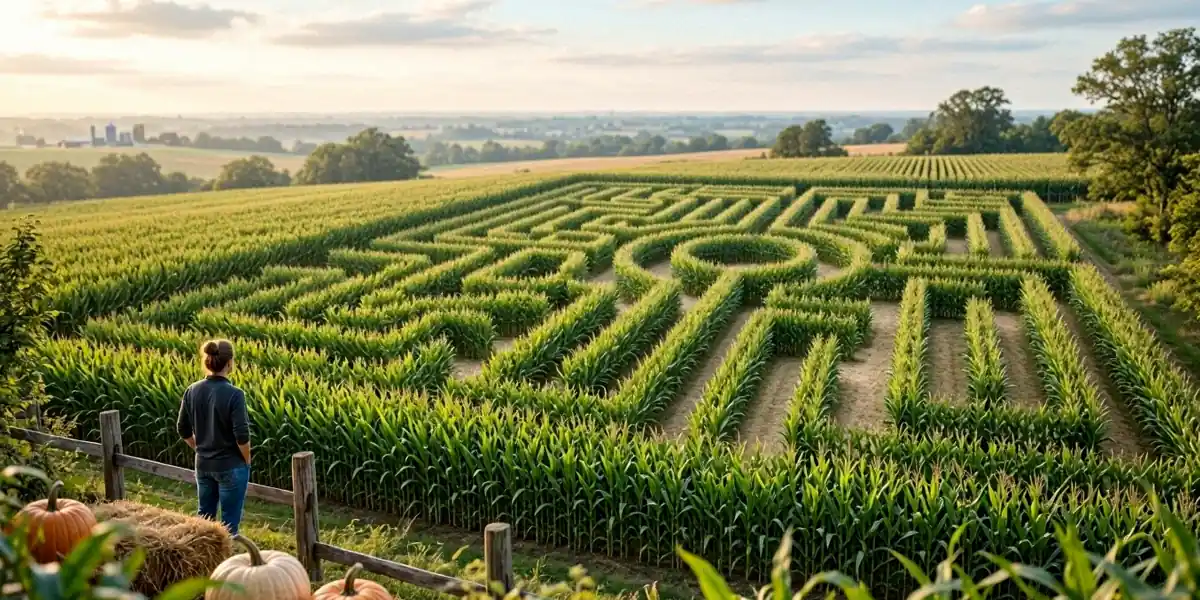
Corn Mazes: Design and History – From Ancient Labyrinths to Haunted Attractions
Every October, somewhere in Australia, a paddock full of corn transforms into a twisting nightmare of dead ends, flickering lights and things that rustle just behind you. Why has the humble corn maze become such a staple of Halloween and scare events across the country? The answer stretches back thousands of years, long before anyone thought to plant a field in rows and charge admission. In this deep dive, we trace the strange journey from ancient labyrinths to modern haunted attractions, unpack the design secrets behind a truly terrifying maze, and show you where to get scared in Australia this season.
The Ancient Roots of Mazes and Labyrinths
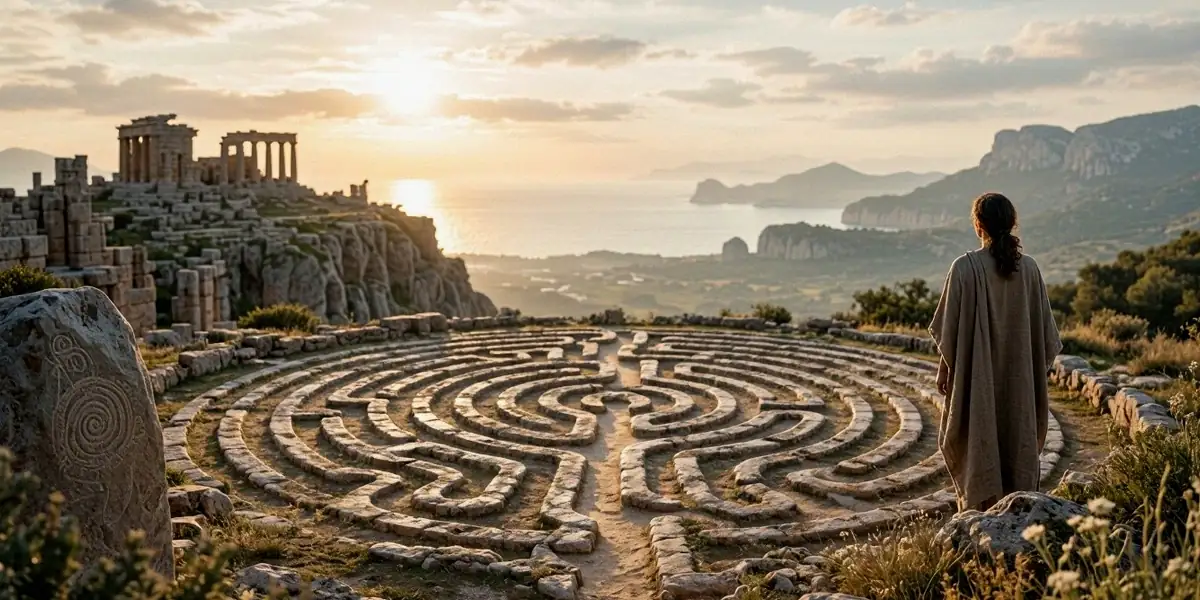
Mazes are not a modern invention, and they were never designed purely for fun. For most of human history, a winding path carried spiritual weight — it represented a journey, a test, or a passage between worlds. That symbolic power is exactly why mazes work so well as scare events today.
Greek Myths and the Minotaur’s Labyrinth
The most famous maze in Western culture comes from Greek mythology: the Labyrinth of Crete, built by the craftsman Daedalus to imprison the Minotaur, a creature with a man’s body and a bull’s head. Visitors who entered were said to be unable to find their way out, and the hero Theseus only escaped by trailing a ball of thread behind him. The story established a template that haunted attractions still exploit — a confusing structure, a monster at the centre, and the fear of never finding the exit.
Medieval Turf Mazes and Religious Symbolism
During the medieval period, turf mazes were cut into village greens and churchyards across Europe. These were not puzzles to be solved quickly; they were walked slowly as acts of penance or pilgrimage, with the single winding path symbolising the soul’s route to salvation. Over centuries, the religious meaning faded and the entertainment value took over, setting the stage for the commercial mazes we know today.
The Rise of the Corn Maze in Modern Agriculture
Corn mazes as we know them are surprisingly recent. They emerged from a practical problem facing farmers in the United States: how to generate income outside the harvest season. The answer was agritourism, and the cornfield turned out to be the perfect canvas.
Agritourism and the American Origins
The first corn maze in the USA was created in 1993 at Lebanon Valley College in Pennsylvania, carved into a field as a fundraising and educational project. It was a modest design by today’s standards, but it proved that people would happily pay to wander through crops. Farmers took note, and by the late 1990s corn mazes had spread across North America as a seasonal attraction, often paired with hayrides, pumpkin patches and petting zoos.
GPS and Design Software Revolution
Early mazes were laid out by hand with stakes and string, which limited how complex they could be. Everything changed with GPS technology, which is now commonly used to design complex corn mazes. Designers plot a pattern on a computer, then walk the field with GPS-guided equipment or handheld devices to cut paths with pinpoint accuracy. This is how modern attractions manage to carve portraits, logos and intricate horror-themed tableaux into several hectares of standing corn.
Design Secrets: How We Build a Haunted Corn Maze
Building a haunted corn maze is part agriculture, part theatre and part logistics. Here is how our team approaches it from the ground up.
Choosing Corn and Cutting Paths
Not all corn is suitable. Field corn is typically used for mazes because of its tall, sturdy stalks, which grow well above head height and create genuine visual isolation. Sweet corn is too short and too valuable as a crop to sacrifice. Once the field is established, we map the layout, mark entry and exit points, and cut paths wide enough for emergency access while keeping sightlines deliberately short. Stalks are left standing between paths to muffle sound and block views.
Integrating Scare Tactics and Lighting
Scare zones are planned before the first stalk is cut. We position actors, animatronics and props at points where visitors are forced to slow down or turn a blind corner, and we vary path width to create moments of false confidence. Lighting does the heavy lifting after dark — dim amber wash on the main route, total blackout in the scare zones, and strobe or flicker effects to disorient. Sound systems hidden in the corn add whispers, footsteps and rustling where there is nothing to see.
Safety and Weather Considerations
Australian conditions demand their own approach. We build mazes for the local Halloween window, which means managing heat, humidity, sudden storms and fire risk. Our checklist includes:
- Clearly marked emergency exits and staffed response points throughout the maze
- Wide main paths for ambulance or fire access, with no dead ends blocking egress
- Gravel or matting on high-traffic sections to prevent muddy slips after rain
- Water stations and shaded rest areas for warm October evenings
- Fire-retardant set dressing and a strict no-open-flame policy
- Pre-season briefings for actors on crowd flow and evacuation procedures
Haunted Corn Mazes in Australia: Where to Get Scared
Australia has embraced the haunted corn maze with real enthusiasm, and several events now rival their American counterparts for sheer nerve-shredding atmosphere.
Victoria’s Haunted Hills Hayride
The Haunted Hills Hayride in Victoria is one of the country’s most popular haunted corn maze events, combining a tractor-drawn hayride with a walk-through maze staffed by costumed actors. The rural setting does a lot of the work — once the sun drops and the only light comes from lanterns along the trail, even the walk back to the car feels longer than it should.
Queensland’s Fear Farm Corn Maze
Queensland’s Fear Farm corn maze brings a distinctly subtropical flavour to the format, with dense crops, humid nights and scare zones that lean into local ghost stories and rural legends. The tighter growing conditions mean paths can feel genuinely enclosed, which is exactly the point.
New South Wales’ Scare Events
In New South Wales, the Sydney Corn Maze offers a haunted maze experience during Halloween, drawing crowds from across the metropolitan area. Operators in the region often weave in colonial-era folklore, bushranger tales and urban legends, giving visitors a scare that feels grounded in Australian history rather than imported wholesale from overseas.
Why Corn Mazes Terrify: Psychology and Atmosphere
There is a reason a corn maze gets under your skin in a way a funhouse never quite does. The fear is built into the environment itself.
Disorientation and Claustrophobia
Mazes strip away your sense of direction. Every path looks like the last one, landmarks are deliberately scarce, and the knowledge that you cannot see over the stalks creates a mild but constant claustrophobia. Research on fear and adrenaline shows that the body responds to this kind of uncertainty much like it responds to a genuine threat — heart rate rises, attention narrows, and the eventual scare lands harder because you were already on edge.
Sensory Overload: Sound, Sight, and Touch
Corn is an unusually effective scare material. The stalks rustle in the slightest breeze, so you can never be sure whether the movement beside you is wind or something else. Add darkness, uneven ground underfoot, sudden bursts of sound and the occasional brush of a prop against your arm, and the senses are overloaded before any actor appears. The result is a sustained low-level dread punctuated by sharp shocks — the exact rhythm that makes haunted attractions so addictive.
The Future of Corn Mazes: Technology and Trends
Corn mazes have already come a long way from stakes and string. The next decade looks set to push them further, and Australian attractions are well placed to adopt these innovations early.
Augmented Reality and Interactive Scares
Augmented reality is beginning to appear in scare events, with visitors using their phones or supplied headsets to layer digital apparitions over the physical maze. Drone light shows are another emerging trend, offering a safe, weather-flexible alternative to fireworks while still delivering a spectacle above the corn. We expect hybrid experiences — real stalks, digital monsters — to become standard at larger events.
Sustainable and Themed Mazes
Sustainability is shaping design too. Operators are experimenting with biodegradable set dressing, solar-powered lighting rigs and mazes that reuse the same field for multiple themed events across the season. Themed mazes built around a single narrative — a haunted asylum, a lost expedition, a colonial ghost story — are also growing in popularity, because a coherent story makes the scares feel earned rather than random.
Frequently Asked Questions
What is the best time to visit a haunted corn maze in Australia?
Most Australian haunted corn mazes run from late September through to the end of October, with the busiest nights falling in the two weeks before Halloween. If you want shorter queues and slightly milder weather, aim for a weeknight early in the season.
Are haunted corn mazes suitable for children?
It depends on the event. Many mazes run a gentler, daylight-friendly session for families and reserve the full scare experience for later evening slots. Check the age recommendations before booking, and never assume a maze is family-friendly just because it is outdoors.
What should I wear to a corn maze?
Closed shoes are essential — the ground is uneven and often muddy. We recommend long pants, insect repellent and a light jacket for cooler evenings. Leave the flip-flops at home.
How long does it take to get through a haunted corn maze?
A typical walk-through takes 20 to 45 minutes, depending on the size of the maze, how often you get lost and how many scare zones slow you down. Larger events with hayrides and additional attractions can take two hours or more.
Do corn mazes use GPS to create their designs?
Yes. GPS technology is commonly used to design complex corn mazes, allowing operators to cut accurate paths and patterns across large fields. It has largely replaced the hand-measured methods used when the first corn maze in the USA was created in 1993 at Lebanon Valley College in Pennsylvania.
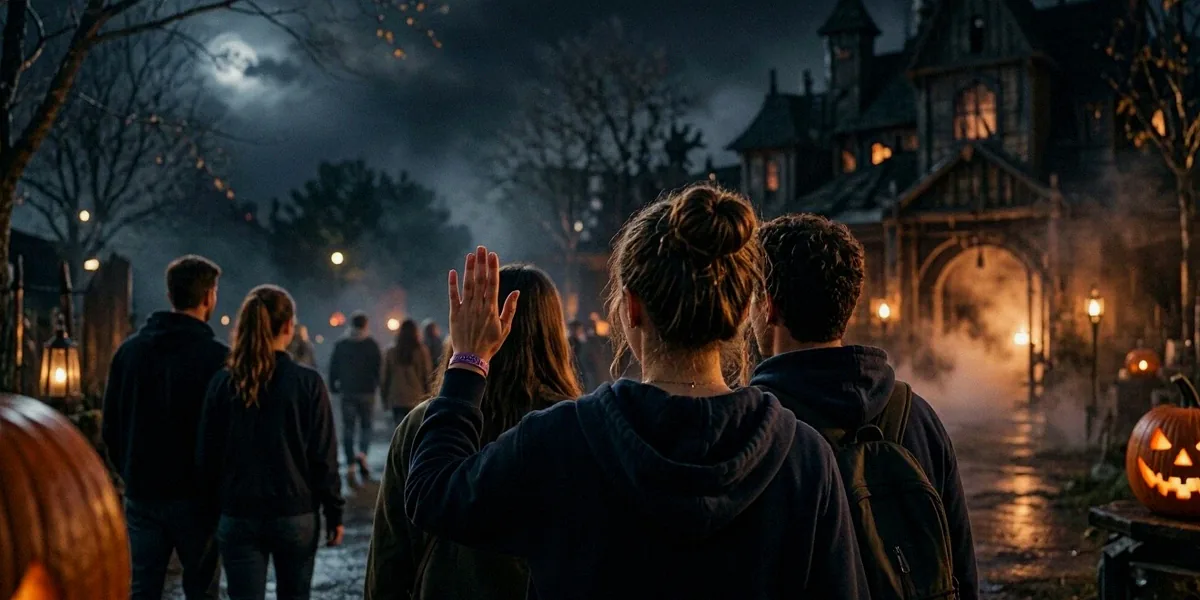
Corn mazes sit at a fascinating crossroads of ancient ritual, modern agriculture and pure adrenaline. From the Labyrinth of Crete to a paddock in regional Victoria, the appeal has stayed the same: a winding path, a lurking threat and the relief of finally finding your way out. This Halloween season, we reckon there is no better way to test your nerves than stepping into a haunted corn maze — just keep one hand on the person in front of you, and try not to look back.

Post Comment