Scare Acting: Tips from the Pros
The corridor is pitch black. A guest shuffles forward, hands out, heart hammering. They round the corner and — nothing. Just an empty chair. They exhale, laugh nervously, turn to their mate. And that’s when the figure drops from the ceiling behind them, six inches from their ear, and whispers their name. The scream that follows is the whole point. But here’s the thing: that moment wasn’t luck. It was blocking, timing, breath control and weeks of rehearsal. We’ve spent years watching scare actors work rooms at The Haunted House at Luna Park Sydney and Screamworld in Melbourne, and the best ones make it look effortless. It isn’t. Here’s how the pros actually do it.
Why Scare Acting Is an Art (Not Just Jumping Out)
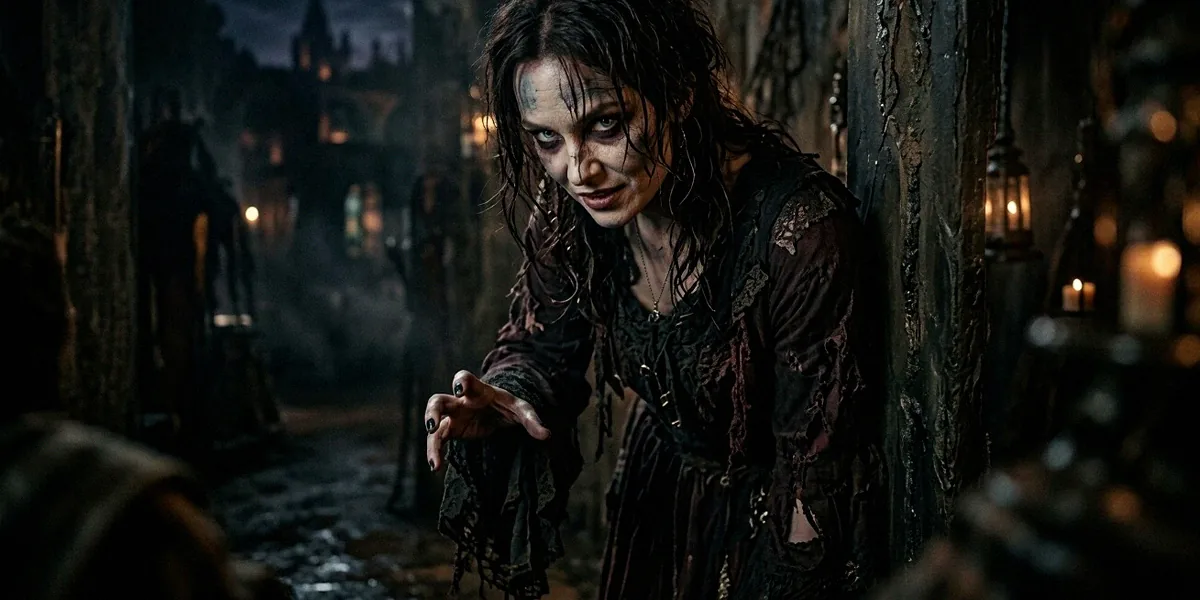
Anyone can yell “boo” from a cupboard. A professional scare actor builds tension, controls pacing and reads a guest’s body language before they even know they’re being watched. The best Australian attractions treat their scare crews like theatre casts, not crowd control staff. The Haunted House at Luna Park Sydney runs its actors through character briefings before every session, and Screamworld in Melbourne rotates performers through different rooms so they learn how fear escalates across a whole walkthrough rather than one isolated pop.
The psychology of fear: startle vs. dread
These are two different tools and they do different jobs. A startle is a reflex — loud noise, sudden movement, over in two seconds. Dread is slower: a shadow that lingers, a sound that doesn’t repeat, a corridor that’s just a bit too long. Great haunts alternate between them. If every scare is a startle, guests go numb by the third room. If everything is dread, they get bored. We aim for roughly a two-to-one ratio of tension-building to jump scares, which keeps the nervous system guessing.
Why character backstory makes scares believable
Ask a scare actor why their character is in that room and a weak answer is “because it’s scary.” A strong answer is a whole life: who they were, what happened to them, why they hate the living, why they limp. That backstory changes how you move, how you breathe, whether you make eye contact. Guests can’t articulate it, but they feel the difference between a person in a mask and a character with a reason to be there.
Building Your Scare Character from the Ground Up
At Warner Bros. Movie World’s Fright Nights, actors don’t just get handed a costume — they develop distinct roles with names, motivations and signature movements. That’s the standard we try to match. Start with four decisions: what is my character, what do they want, how do they move, and what sound do they make?
Choosing an archetype: ghost, slasher, creature, or clown
Each archetype has its own scare rhythm:
- Ghost — slow, drifting, uses silence and sudden proximity rather than noise.
- Slasher — deliberate, predatory, stalks from a distance before closing in.
- Creature — low, animalistic movement, growls, unpredictable angles.
- Clown — fast, erratic, breaks social rules, laughs at the wrong moments.
Pick one and commit. Mixing archetypes mid-scare reads as confusion, not menace.
Costume and makeup that enhance (not hinder) movement
We’ve seen brilliant actors ruined by a mask they can’t see through or boots that slip on wet floors. Test every costume in a dark room before opening night. Can you crouch? Can you turn your head 90 degrees? Can you breathe hard for five minutes without fogging your lenses? If not, cut it. Prosthetics should be checked for skin irritation, and anything with trailing fabric needs to be trimmed so it can’t catch on props or trip a guest.
Voice and sound design: growls, whispers, and silence
Your voice is the cheapest and most effective scare tool you own. A growl from the chest is far more unsettling than a shout from the throat. Whispers force guests to lean in — which puts them exactly where you want them. And silence, used properly, is the loudest thing in the room. Hold it. Let them fill the gap with their own imagination. Then move.
Timing, Spacing, and Reading the Room
Corn maze actors at Victoria’s Corn Maze at Bundoora Park have one of the hardest jobs in the country: no walls, no lighting rig, no fixed path. They time scares by sound and footstep rhythm alone. That discipline is a masterclass for anyone working any haunt.
The 3-second rule: when to strike
Wait three full seconds after a guest enters your zone before you reveal yourself. That’s enough time for their eyes to adjust, for their guard to drop, and for the group to spread out. Strike too early and you scare the front person only. Strike at three seconds and you catch the middle of the group — usually the most frightened guest, and usually the one whose scream sets off everyone else.
Misdirection: using props and sound to set up a scare
Misdirection is the oldest trick in the haunt book. A door slams on the left so the actor can approach from the right. A hanging prop draws the eye upward so the real scare comes from floor level. A recorded scream in the next room pulls attention forward so you can step out behind. The guest’s brain commits to one threat, and you deliver another.
Adapting to different guest reactions (screamers, laughers, runners)
Not every guest reacts the same way, and pros adjust on the fly:
- Screamers — give them the scare, then back off immediately. Don’t chase.
- Laughers — break character slightly, tilt your head, let them feel watched. They’ll stop laughing.
- Runners — never pursue. Let them go. Safety first, always.
- Freezers — slow down, hold eye contact, give them a beat to move on their own.
Staying Safe While Being Terrifying
The Dark Side Haunted House in Brisbane runs one of the tightest safety briefings in the country, and every haunt should. Scaring people is a physical job performed in the dark around strangers. The rules exist because things go wrong fast.
Physical safety: trip hazards, low ceilings, and costume limits
Walk your own zone with a torch before every shift. Know where the cables are, where the ceiling drops, where the floor is uneven. Never touch a guest — not a tap on the shoulder, not a grab at a sleeve. Maintain at least arm’s length and let them come to you if they want contact. Costumes must allow you to see, breathe and move freely, and any mask that fogs up or restricts peripheral vision needs to be swapped out.
Psychological safety: knowing when to back off
Some guests are genuinely terrified, not entertained. Watch for real distress: crying, freezing, hyperventilating, calling for help. When you see it, break character, step back, and let them pass. A good scare ends with a laugh. A bad one ends with a guest in tears at the exit, and that’s a failure on our part, not theirs.
Emergency procedures and communication with crew
Every haunt needs a code word that stops the show — something a guest or actor can say to bring the lights up immediately. Know your exits, know your nearest crew member, and know how to signal for help without breaking the experience for everyone else. Radio checks before every session, no exceptions.
Training Drills and Team Chemistry
Scare teams at Halloween Horror Nights at Universal Studios Japan rehearse for weeks before opening, and local Australian groups like The Haunted Hunters run their own drills year-round. The chemistry between actors is what makes a haunt feel alive rather than assembled.
Warm-up games for voice and body
Before every shift, we run a short warm-up: humming scales to loosen the throat, slow neck and shoulder rolls, and a game where two actors mirror each other’s movement for 60 seconds. It sounds silly. It also catches injuries before they happen and gets everyone into a shared rhythm.
Giving and receiving feedback after a run
After every session, the team gathers for a debrief. What landed? What got no reaction? Which guest walked straight past a scare that should have stopped them? Feedback needs to be specific and behavioural — “your timing was half a second early on the second group” beats “that was good.” Actors who can take notes without ego improve fastest.
Building trust with your scare team
You’re going to be in the dark with these people for hours. Trust means knowing your mate will cover your zone if you need to step out, that they’ll never break your character in front of a guest, and that they’ll call the code word if something’s wrong. That trust is built in rehearsal, not on opening night.
Learning from Australian Haunt Legends
Australia has a tight, generous haunt community. The team behind Sydney’s Zombie Walk has been mentoring new performers for years, and the actors at The Haunted Mansion in Adelaide regularly share techniques with smaller operations. If you want to learn, the door is genuinely open.
Interviews with local pros: what they wish they knew
When we ask veteran Australian scare actors what they’d tell their younger selves, three answers come up again and again: learn to breathe properly, protect your voice, and don’t try to scare every single guest — pick your moments. The best actors aren’t the loudest. They’re the most patient.
How to get started in the Australian haunt scene
Start by volunteering. Most haunts need extra hands for setup, crowd management and makeup, and that’s how you get on the radar of the people who cast scare roles. Show up on time, take direction, and be reliable. Reliability gets you cast more often than raw talent.
Resources: workshops, meetups, and online groups
Look for local haunt meetups in Sydney, Melbourne, Brisbane and Adelaide, and follow the social pages of attractions like Screamworld and The Dark Side Haunted House — they often post casting calls before the season starts. Online haunt communities also run workshops on makeup, prop building and character work throughout the year.
FAQ
Do I need acting experience to become a scare actor?
No, but you need to be reliable and coachable. Most Australian haunts train new performers from scratch, and enthusiasm plus punctuality will get you further than a drama degree.
Is scare acting physically demanding?
Yes. You’ll be crouching, holding positions, and moving in the dark for hours at a time. Warm-ups, hydration and proper footwear are non-negotiable.
Can I touch guests in a haunted house?
No. Professional haunts in Australia operate on a strict no-touching rule for both actors and guests. It protects everyone and keeps the experience safe.
What’s the best way to time a jump scare?
Wait about three seconds after a guest enters your zone, then strike when the middle of the group is closest. That catches the most people at once without targeting the front runner.
Where can I see professional scare acting in Australia?
Check out The Haunted House at Luna Park Sydney, Screamworld in Melbourne, Warner Bros. Movie World’s Fright Nights, the Corn Maze at Bundoora Park in Victoria, and The Dark Side Haunted House in Brisbane.
Scare acting is a craft built on respect, practice and creativity — respect for the guest’s boundaries, practice in the rehearsal room, and creativity in how you build a character worth being frightened of. If you’re a fan, buy a ticket and support your local Australian haunted attractions. If you’re an aspiring actor, turn up, listen, and put in the hours. The scream you earn will be worth it.

Post Comment