Safety Rules at Scare Events: What Every Australian Haunt-Goer Should Know
We still remember the night at a pop-up haunt in Western Sydney when a punter bolted out of a dark corridor, tripped over a cable cover, and took out two strangers on the way down. Nobody was seriously hurt, but it was a close call — and it happened because one person forgot the golden rule of scare events: the fear is fake, but the floors, stairs and other people are very real. We’ve watched hundreds of Australians get their adrenaline fix at haunted houses, corn mazes and Halloween festivals, and the same avoidable mistakes keep popping up. So here’s our plain-English guide to safety rules at scare events, from pre-entry checks to what to do after the screaming stops.
Why Safety Rules Matter at Haunted Attractions
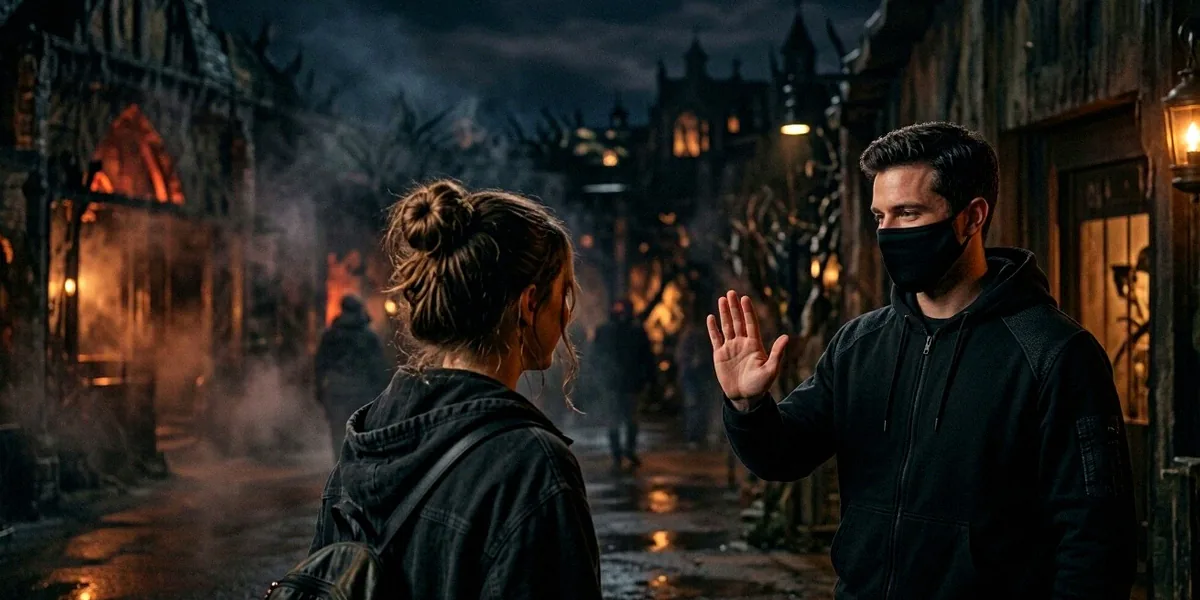
Haunted attractions are engineered to mess with your nervous system. Fog machines, strobe lights, sudden lunges and pitch-black corridors all work together to trigger a genuine stress response — and that’s exactly the point. The problem is that a body in fight-or-flight mode doesn’t always make smart decisions. People run when they should walk, grab when they should keep their hands to themselves, and freeze in doorways while a queue of people piles up behind them.
Temporary builds make this riskier. Pop-up haunted houses at Luna Park Sydney and the various Halloween festivals around Melbourne are often assembled inside marquees or repurposed venues, which means uneven flooring, tight turns and temporary electrical setups. Permanent parks have the advantage of year-round maintenance, but even they rely on guests following the rules.
The psychology of fear and fight-or-flight
When something jumps out at you, your amygdala fires before your rational brain catches up. Heart rate spikes, pupils dilate, and your body gets a surge of adrenaline and cortisol. In a controlled haunt, that’s fun. In a crowd, it’s a recipe for collisions, dropped phones, trampled toes and the occasional panic attack. Knowing that your reaction is chemical, not personal, helps you stay in control of your body even when your brain is screaming at you to sprint.
Common incidents at Australian scare events
Based on what we’ve seen and heard from operators around the country, the most frequent incidents are:
- Trips and falls caused by running or not watching the path
- Minor injuries from guests grabbing or pushing actors
- Lost children separated from their group in dark mazes
- Panic attacks and fainting in tight, hot or strobe-lit spaces
- Phone-related incidents — dropped devices, flash photography startling actors, or guests walking into walls while filming
Before You Enter: Pre-Event Safety Checks
The safest haunt-goers are the ones who do their homework before they leave the house. Most Australian operators publish health warnings, age guidance and accessibility notes on their websites, and it’s worth reading them properly rather than skimming. Venues like the Hawkesbury Harvest Maze and the Port Arthur Ghost Tours are upfront about what to expect, and they’d rather you self-select out than have a bad night.
Health and medical considerations
If you have a heart condition, epilepsy, asthma, anxiety disorder or are pregnant, check the event’s warnings before booking. Strobe lighting, fog juice, tight spaces and sudden loud noises are standard at most haunts, and they can trigger real medical events. Bring your inhaler or any necessary medication, tell your group where it is, and don’t be embarrassed to skip a room if it feels wrong.
Age and supervision rules
Most Australian scare events rate their attractions by intensity. Family-friendly Halloween trails might welcome kids as young as five, while extreme haunts often set a minimum age of 15 or 16 and require ID at the gate. If you’re bringing younger teens, check whether the venue requires a supervising adult to stay on-site, and brief kids beforehand that the actors are performers doing a job — not real threats.
Accessibility and mobility
Not every haunt is wheelchair or pram friendly, and temporary builds are often the worst offenders. Contact the operator ahead of time if you use a mobility aid, have a service animal, or need a quieter route. Some events, including certain nights at the bigger theme parks, run sensory-friendly or low-scare sessions that are worth asking about.
Inside the Haunt: Rules to Follow
Once you’re through the gate, the rules are simple but non-negotiable. Warner Bros. Movie World’s Halloween Horror Nights, for example, publishes a clear code of conduct that covers most of what you need to know: no running, no touching actors, no aggressive behaviour, and follow staff instructions at all times. Break those rules and you’ll be escorted out — sometimes without a refund.
Physical conduct and personal space
Actors are trained to get close, but they should never actually touch you, and you should never touch them. No grabbing, no shoving, no play-fighting back. Keep your hands free where possible so you can steady yourself on railings, and walk — don’t run — even when something is chasing you. If you’re in a group, agree on a walking order and stick together; the person at the back is the most likely to get separated.
Emergency procedures and exits
Before you enter, take ten seconds to note where the nearest exit is and how staff are identifiable (usually high-vis vests or glow sticks). If you need to leave mid-haunt, tell the nearest staff member rather than trying to find your own way out. If the fire alarm sounds, drop the act, follow the illuminated exit signs, and don’t run.
Photography and recording policies
Most haunted attractions ban flash photography and video recording inside the haunt. Flashes ruin the experience for everyone behind you, blind actors who are navigating dark spaces, and can trigger photosensitive reactions in other guests. If photography is allowed, it’s usually restricted to designated zones. Check the signage or ask at the gate.
Special Considerations for Corn Mazes and Outdoor Events
Corn mazes and outdoor scare trails add a whole extra layer of risk: terrain, weather and the genuine possibility of getting lost. Venues like the A-Maze-N Corn Maze in Victoria and the Haunted Hills in Queensland run excellent safety protocols, but they rely on guests cooperating with them.
Navigating uneven ground and darkness
Corn fields are dirt, not footpaths. Wear enclosed shoes with grip, watch for roots and irrigation lines, and use the torch on your phone only if the event permits it. Stay on marked paths — cutting through the corn is how people get lost, damage crops, and stumble into areas that aren’t part of the attraction.
Weather preparedness
Australian spring and autumn weather can turn fast. Check the forecast, dress in layers, and bring a rain jacket rather than an umbrella (which becomes a hazard in a crowd). If lightning is in the area, most outdoor events will pause or close — follow staff instructions and don’t argue about refunds at the gate.
Lost person procedures
If you get separated from your group, stop walking and stay put if it’s safe to do so. Most mazes have staff positioned at intersections — find one and report the separation. For children, write your mobile number on their wrist or use a wristband before you enter, and agree on a meeting point at the entrance in case anyone gets lost.
After the Scare: Post-Event Safety
The night doesn’t end when you exit the gate. We always recommend a quick debrief with your group: check everyone’s accounted for, look for any bumps, cuts or twisted ankles, and give anyone who needs it a few minutes to calm down. Some events, including horror nights at the Adelaide Fringe, offer post-event support or chill-out zones — use them if you need to.
Checking for injuries and reporting
Adrenaline masks pain. Once you’re back in the car park, do a proper check: ankles, knees, hands and heads. If anyone was injured inside the attraction — even minor — report it to event staff before you leave, both for your own records and so the operator can fix the hazard.
Mental health and fear after-effects
For most people, the fear fades within minutes. For some, especially those with anxiety or trauma histories, it lingers. Nightmares, jitteriness or a low mood the next day are normal short-term reactions. If they persist beyond a few days, talk to your GP or a mental health service like Lifeline (13 11 14).
FAQ
Can I touch the actors at a haunted house?
No. Actors are trained to create the illusion of danger without contact, and touching them is a breach of conduct at every reputable Australian haunt. You’ll likely be removed from the attraction.
Are haunted attractions suitable for young children?
It depends on the event. Family-friendly Halloween trails are usually fine for primary-school kids, but extreme haunts often set minimum ages of 15 or 16. Always check the event’s rating before booking.
What should I do if I get lost in a corn maze?
Stop, stay calm, and look for a staff member at a marked intersection. If you can’t find one, stay where you are and call the event’s contact number — wandering deeper into the corn makes it harder for staff to find you.
Is flash photography allowed inside scare events?
Rarely. Most haunts ban flash and video recording inside the attraction because it ruins the experience for others and can disorient actors. Check signage or ask at the gate.
What if I have a panic attack inside a haunted house?
Tell the nearest staff member immediately — they’re trained to escort guests out calmly. Don’t try to push through the rest of the attraction. There’s no shame in leaving early.
Following the rules at scare events isn’t about spoiling the fun — it’s what lets everyone enjoy the thrill without a real-life horror story to tell afterwards. Walk, don’t run, keep your hands to yourself, stay with your group, and speak up if something feels off. If you’ve got a safety tip from your own haunt-going experience, we’d love to hear it — drop us a line and help keep Australia’s scare scene safe for everyone.

Post Comment