How Haunted Attractions Are Built: A Behind-the-Screams Look
We still remember the exact moment it happened. We were shuffling through a pitch-black corridor somewhere in Sydney, hands out in front of us, when a chainsaw roared to life inches from our ear. Our feet left the floor. Our dignity left the building. But once our heart rate settled, the question stuck with us: how do you actually build something that scares people that effectively, night after night, without anyone getting hurt? So we went digging. Here’s what we found about how haunted attractions in Australia go from a scribble on a whiteboard to a fully operational scream machine.
Designing the Fear: From Concept to Blueprint
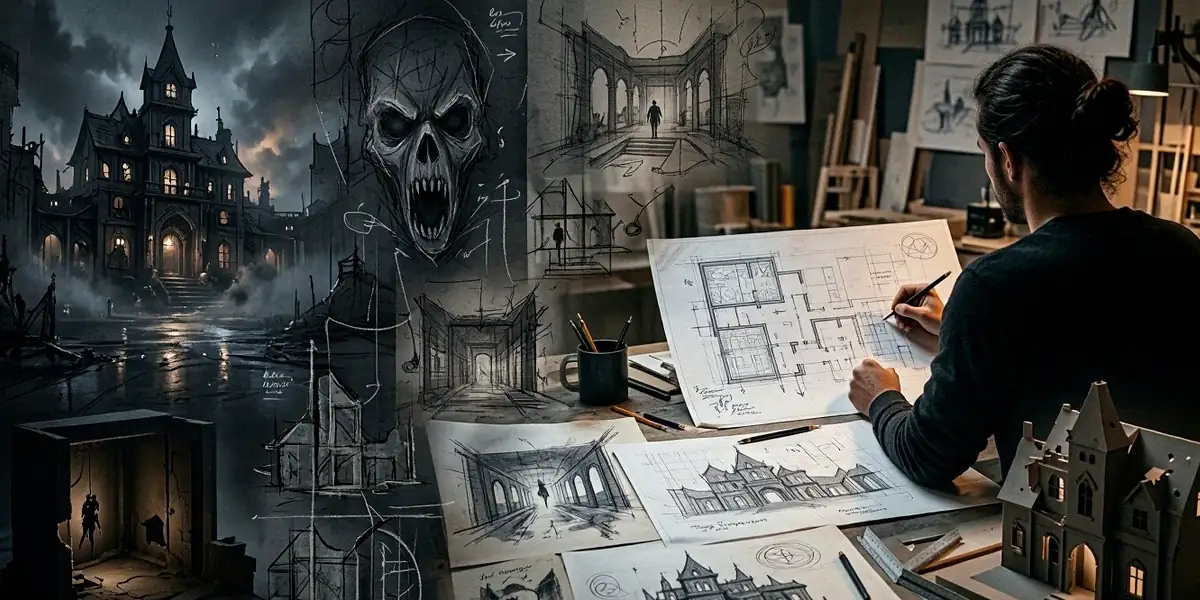
Every great haunted attraction starts long before anyone picks up a power tool. It starts with a concept — a theme, a story, and a plan for exactly where and when guests will get scared. In Australia, designers behind major events like Halloscream at Sydney’s Luna Park spend months in this phase, sketching layouts and deciding what kind of fear they’re selling: psychological dread, jump scares, gross-out horror, or a mix of all three.
Choosing a Theme and Storyline
A haunted house with no story is just a dark room with props in it. Designers build a narrative spine — a cursed asylum, a haunted farmhouse, a zombie outbreak — and every room, sound cue, and actor character hangs off that spine. The theme also dictates the audience. A family-friendly Halloween event needs spooky-fun, not trauma. An adults-only scare event can push much harder. Getting this wrong is the fastest way to a bad review.
Mapping Scare Zones and Guest Flow
This is where the engineering brain takes over from the creative one. Designers draw a “scare map” that plots every scare point, every hiding spot, and every transition between rooms. Guest flow matters enormously — too fast and people miss scares; too slow and you get bottlenecks that kill the tension and create safety risks. Corn maze designers face the same puzzle on a bigger scale, using winding paths and dead ends to control pacing across an entire field.
Set Construction and Special Effects
Once the blueprint is locked, it’s time to build. And the materials used might surprise you — haunted attractions are less Hollywood magic and more hardware store ingenuity.
Materials That Scream on Cue
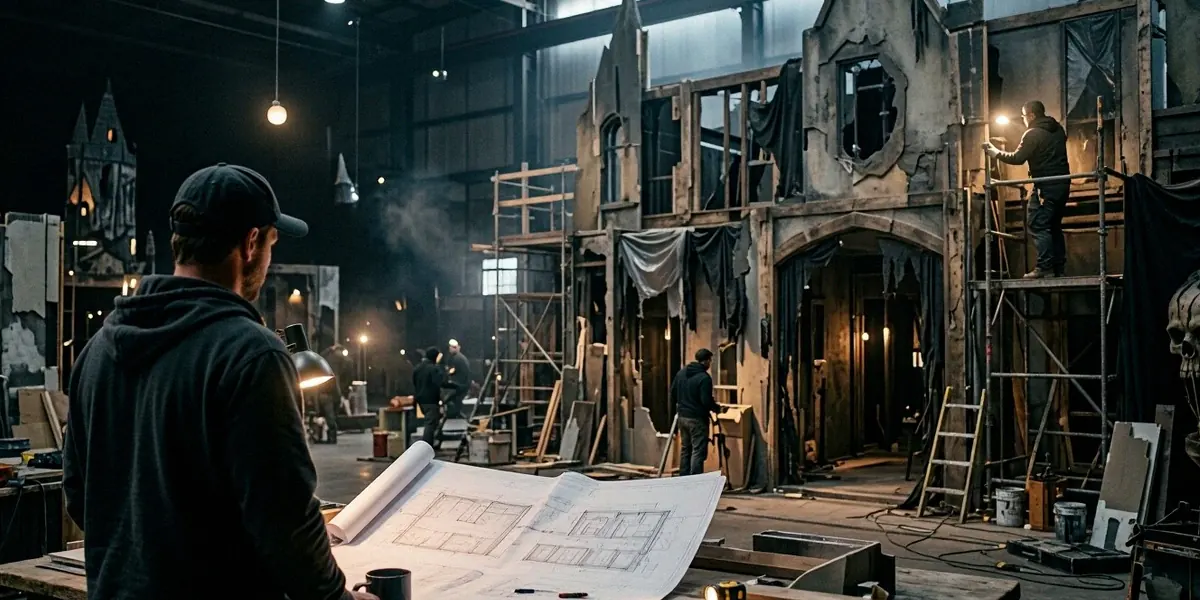
Plywood, MDF, foam board, and timber framing form the bones of most sets. Polystyrene foam gets carved and painted to look like crumbling stone, rotting timber, or flesh. Fake blood, latex, and cheesecloth create gore effects on a budget. For outdoor events like the Haunted Hills corn maze in Victoria, construction is a different beast entirely — structures have to survive wind, rain, and thousands of trampling feet, so everything is braced, weighted, and weatherproofed. A typical build list for a mid-sized attraction includes:
- Plywood and timber framing for walls and corridors
- Polystyrene and expanding foam for sculpted props and textures
- Latex, silicone, and fabric for costumes and gore effects
- Blackout fabric and mesh to control sightlines
- Pneumatic and motorised rigs for animatronic movement
- Weatherproofing and ground anchoring for outdoor builds
Lighting, Sound, and Animatronics
Lighting is the cheapest scare in the toolbox and the most effective. A single flickering bulb, a strobe timed to a sound cue, or a corridor lit only by UV paint can do more than a $10,000 prop. Sound design layers ambient dread underneath everything — low hums, distant screams, whispers that guests can’t quite locate. Animatronics range from simple pop-up mechanisms triggered by pressure mats to programmable figures with moving heads and limbs. The golden rule: the effect must be reliable. A broken animatronic mid-show is worse than no animatronic at all.
Training Scare Actors and Managing the Scare
You can build the best set in the country, but without skilled actors it’s just a walk through some dark rooms. Events like Fright Nights at Warner Bros. Movie World run structured actor training programs, and the discipline involved is genuinely impressive.
Timing, Hiding, and Jump Scares
New scare actors almost always make the same mistake: they scare too early. The art is in the wait. Actors learn to read a group’s pace, pick the right target — usually the person at the back or the one already nervous — and strike at the exact moment of maximum vulnerability. They also learn to reset fast. A scare zone might see hundreds of groups per night, and every single one deserves a fresh, full-energy performance.
Safety Protocols for Actors and Guests
Actors are trained never to touch guests, never to block exits, and never to pursue anyone who is clearly distressed. They work in low light with fog, strobes, and loud noise, so communication systems and escape routes are built into every zone. Guests, meanwhile, are briefed on rules before entering: no running, no touching props or actors, and no re-entry after exiting.
Safety, Regulations, and Insurance
This is the unglamorous part that keeps everyone alive and out of court. Australian haunted attractions must comply with safety standards for temporary events, which cover everything from structural integrity to electrical safety, fire resistance, and emergency egress. Operators of events like Luna Park’s Halloween activations work closely with local councils and fire authorities to get approvals before a single guest walks through the gate.
Fire Safety and Emergency Exits
Dark, maze-like spaces filled with fabric, foam, and electrical equipment are a fire risk, and regulators know it. Requirements typically include clearly marked emergency exits that work even in blackout conditions, flame-retardant materials, extinguishers at regular intervals, and staff trained in evacuation procedures. Fog machines and pyrotechnics face extra scrutiny.
Crowd Management and Insurance
Capacity limits, timed entry slots, queue management, and trained crowd controllers are standard at larger events. Public liability insurance is non-negotiable — without it, no council will approve the event. Insurers assess the attraction’s safety record, construction quality, and emergency plans before offering cover, which means safety and insurability go hand in hand.
The Final Touches: Testing and Opening Night
In the final weeks, the attraction comes alive for rehearsals. This is where all the planning meets messy reality — and where the best operators separate themselves from the rest.
Rehearsals and Soft Openings
Actors run full circuits, effects are triggered on cue, and timing gets tightened. Many attractions hold soft openings with friends, family, or small invited groups before the public arrives. The Old Melbourne Gaol’s ghost tours, which have been refining their craft for years, show how valuable this feedback loop is — small adjustments to pacing and delivery can transform a decent scare into an unforgettable one.
Adjusting Scares Based on Guest Reactions
Even after opening night, the work continues. Operators watch footage, debrief actors, and track which rooms get the biggest reactions. A scare that lands every time gets kept and sharpened. One that consistently falls flat gets reworked or replaced. Haunted attractions are living productions, tweaked night after night for the entire season.
FAQ
How long does it take to build a haunted attraction?
Smaller attractions can come together in a few weeks, but large-scale events with custom sets, animatronics, and trained cast members often take three to six months of planning and construction before opening night.
Are haunted houses in Australia safe for children?
It depends on the event. Many Halloween attractions offer family-friendly sessions with milder scares, while others are strictly for older audiences. Always check the age recommendations before booking.
Do scare actors actually touch guests?
No. Professional haunted attractions train actors never to make physical contact with guests. Any attraction that allows touching is not following standard industry safety practice.
What safety rules apply to Australian haunted attractions?
They must meet Australian safety standards for temporary events, including fire safety, emergency exits, electrical compliance, structural stability, and crowd management, plus hold public liability insurance.
Why do corn mazes work so well for scare events?
Corn mazes like the Haunted Hills maze in Victoria offer natural disorientation, limited sightlines, and long winding paths — perfect conditions for building tension and delivering scares across a large outdoor space.
Building a haunted attraction is a genuine blend of art and engineering — part theatre, part construction site, part risk management exercise. The next time a scare actor makes you jump out of your skin at a Halloween event, spare a thought for the months of design, building, training, and testing that made that one second possible. We certainly do now.

Post Comment